Skip to content
VR Manufacturing safety training

AR VR App Development for Manufacturing Training in 2026

Kumaragurubaran
Kumaragurubaran

Manufacturing training is under pressure to become faster, safer, and more consistent across locations. In 2026, AR VR app development is helping manufacturers move beyond static manuals toward immersive training experiences that improve onboarding, support maintenance readiness, and reduce operational risk.

Reviewed by: 
Durairaj Dhandapani - Senior XR Developer - Yaksha Visual Technologies  


$50B Annual cost of technician-error downtime
40% Reduction in onboarding time with VR
90 days From discovery to live pilot deployment


Why Manufacturing Training Needs AR and VR in 2026

Manufacturing floors are getting more complex — and the workforce challenges are getting harder. Equipment downtime caused by technician error costs manufacturers an estimated $50 billion annually worldwide. Meanwhile, experienced workers are retiring faster than new hires can ramp up, creating dangerous skills gaps on production lines and maintenance teams.

Traditional training methods — printed manuals, classroom sessions, shadowing — are no longer sufficient. They are slow, inconsistently delivered across shifts and sites, and offer no safe environment for learners to make mistakes.

The core challenge: Knowledge transfer in manufacturing has always depended on proximity — the expert standing beside the learner. AR VR app development removes that dependency entirely, putting expert guidance in every worker's hands, at every site, at any time.

In 2026, the question is no longer whether to invest in immersive training technology. It is which development partner can deliver it reliably across your operations.

Why AR VR App Development Matters for Manufacturing Training in 2026


Manufacturing environments demand precision, repeatability, and strong safety performance. Training programs must prepare workers for equipment operation, standard operating procedures, emergency response, and plant-specific processes without slowing production or increasing exposure to avoidable hazards.

Traditional training methods still serve a role, but they often create gaps in readiness:

Onboarding Delays

New hires may need more time to understand plant layouts and machine procedures.

Maintenance Dependency

Maintenance teams may rely on printed documents or supervisor availability for task guidance.

Inconsistent Multi-Site Quality

Multi-site organisations can struggle to keep training quality consistent from one location to another.

Context-Poor Safety Refreshers

Safety refreshers may not fully reflect the context of the actual work environment.

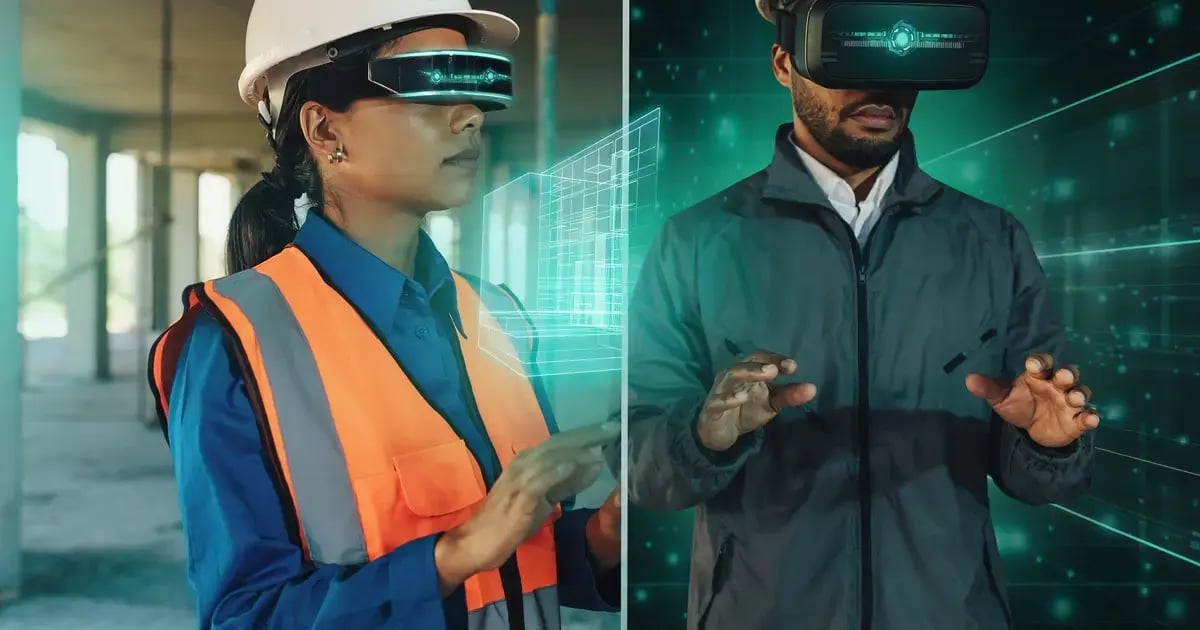
AR VR app development addresses these issues by placing workers in realistic, interactive learning environments. VR supports repeatable practice for safety procedures, operations, and incident response. AR supports in-context guidance for inspections, service steps, and equipment maintenance workflows. Together, they create a stronger foundation for cross-platform worker training that can support both learning and performance on the job.

What Is AR VR App Development for Manufacturing?

AR VR app development for manufacturing refers to the design, build, and deployment of Augmented Reality (AR) and Virtual Reality (VR) software applications purpose-built for industrial training, maintenance, and operational safety.

The Business Value of AR and VR for Safety and Training Managers

For manufacturing safety and training leaders, immersive technologies are most valuable when they improve measurable outcomes. A well-planned program can support:

Faster onboarding

VR modules and 360 plant walkthroughs help new employees understand spaces, procedures, and expectations before they enter live production areas. This is especially useful for large facilities and organisations with frequent hiring needs.

Safer skill development

Workers can practice lockout-tagout procedures, hazard identification, machine startup sequences, or emergency scenarios in virtual environments before performing tasks in the field.

Better training consistency across sites

Standardised content can be deployed across locations while still allowing local adaptation for equipment variations, site layouts, and compliance requirements. This is essential for multi-site manufacturing plant deployment.

Stronger maintenance readiness

With equipment maintenance AR applications, technicians can receive structured visual instructions, part references, and procedural guidance aligned with actual machines and service workflows.

Reduced travel and retraining overhead

Supervisors and subject matter experts can contribute to one structured digital program rather than repeating the same in-person demonstrations across every site.

Core Capabilities: What Yaksha Delivers

Not every immersive application is equally useful in industrial environments. For manufacturers, the most effective solutions are built around operational relevance, technical clarity, and deployment practicality.

VR training modules for operational and safety scenarios

VR is well suited to high-value training moments where repetition and situational awareness matter. Examples include:

Machine operation training
Assembly process training
Safety induction programs
Emergency response drills
Hazard recognition exercises
Confined process walkthroughs
Supervisor-led refresher training

These immersive training experiences help workers build confidence before entering live environments. They also support standardised learning paths for organisations managing multiple facilities.

AR maintenance support for equipment workflows

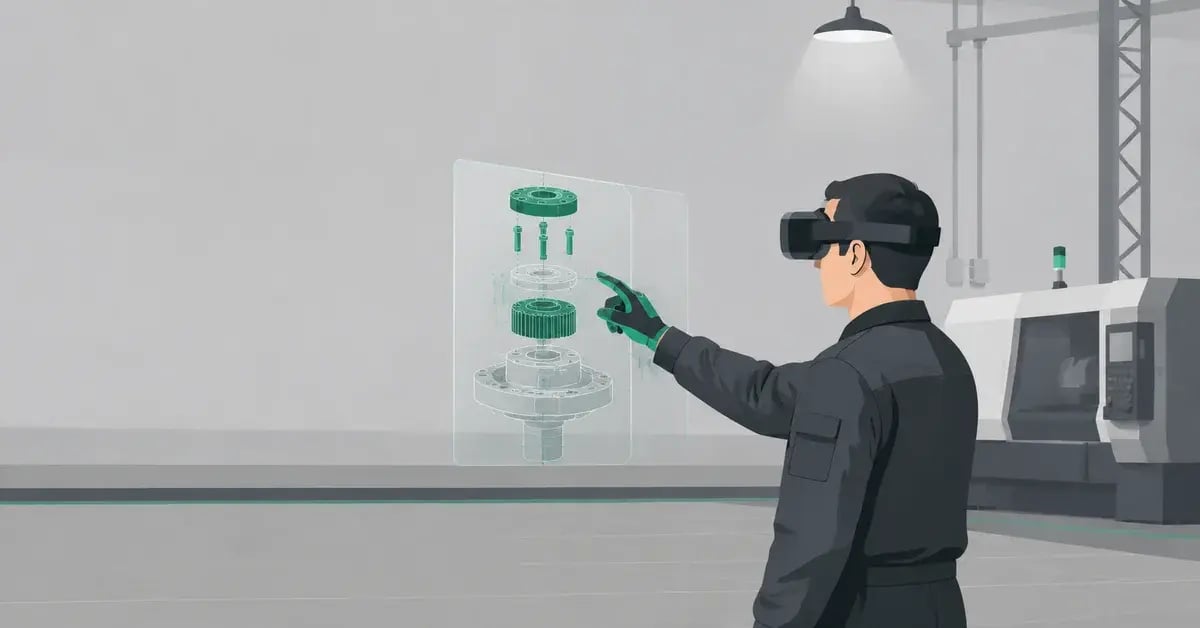
AR applications can guide workers through inspections, maintenance routines, and service tasks using step-by-step visual overlays and interactive real-time 3D content. For manufacturing organisations, this can support

AR Maintenance Use Cases

  • Inspection checklists
  • Preventive maintenance guidance
  • Component identification
  • Troubleshooting support
  • Equipment familiarisation
  • Service documentation alignment
This makes AR maintenance and VR training support especially valuable for teams responsible for uptime, reliability, and procedural accuracy.

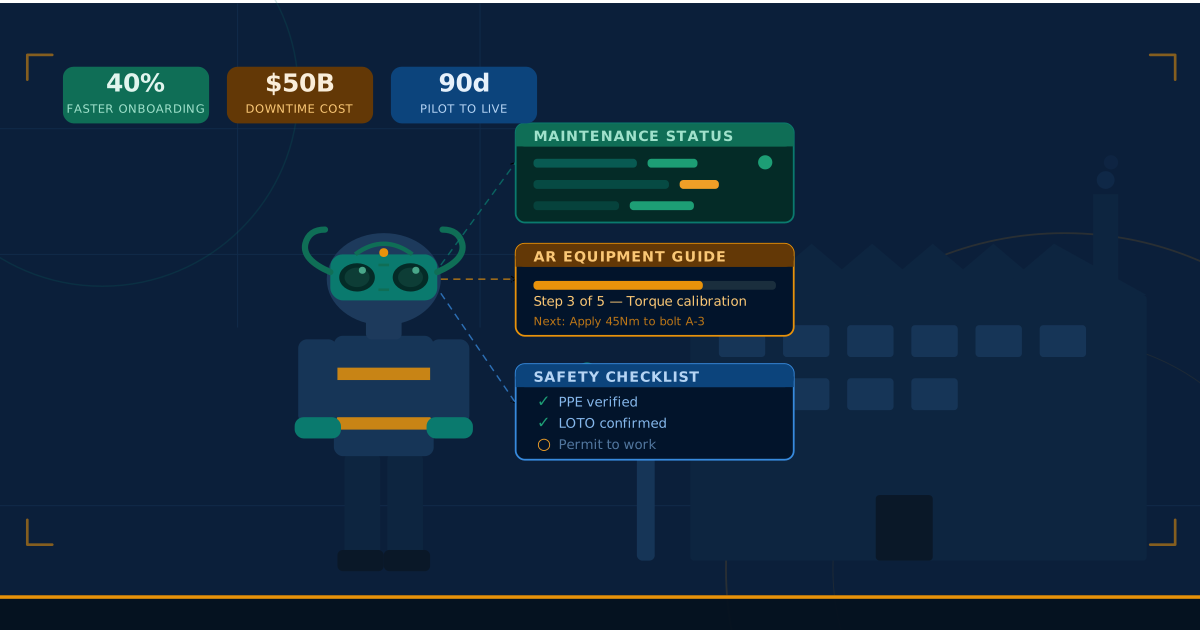
Cross-platform delivery reduces friction during rollout and allows training programs to fit the actual device landscape of the organisation.

How 360 Virtual Tours Strengthen Manufacturing Training Programs

For many manufacturers, 360 virtual tours development is one of the most practical starting points for immersive training. A 360 tour can act as a visual orientation layer that supports onboarding, compliance, process awareness, and remote site familiarisation.

In a manufacturing context, 360 virtual tours can be used to:

  • Introduce new hires to plant layouts
  • Show restricted and high-risk areas before site access
  • Explain workflow zones and movement paths
  • Support contractor orientation
  • Connect equipment locations to digital training resources
  • Create a foundation for digital twin experiences

This is particularly effective for organisations that value a complete visual record of operational environments for tracking and planning. When integrated with broader training content, 360 tours become more than a marketing asset — they become part of a structured learning and operational support system.


AR VR App Development and Digital Twin Readiness

Manufacturers increasingly want training systems that connect to broader operational visibility. That is why many immersive projects are now designed with digital twins in mind.

A digital twin-oriented training ecosystem helps manufacturers build training environments that remain useful over time — rather than isolated one-off applications.


A digital twin-oriented training ecosystem can combine:

  • 3D facility visualisation
  • Equipment-specific training content
  • Maintenance procedures
  • Space-based navigation
  • Safety scenario mapping
  • Future integration with IoT or operational data layers

For teams planning long-term modernisation, AR VR app development can serve as an early step toward more connected and data-informed industrial visualisation.

A Practical Deployment Approach for Multi-Site Manufacturing

A common reason immersive projects stall is that the deployment plan is not aligned with operational realities. For multi-site manufacturing plant deployment, success depends on phased execution and clear content governance.

This kind of structured rollout is what turns immersive technology from a promising concept into a repeatable training capability.

What Manufacturing Safety and Training Managers Should Look for in a Development Partner

Choosing the right partner for AR VR app development is not only about technical delivery. It is about whether the solution can support adoption, scale, and business relevance.

A strong manufacturing-focused partner should be able to provide:

PARTNER CAPABLITIES CHECKLIST


  • Expertise in AR and VR technologies for industrial use cases
  • Support for cross-platform worker training
  • Understanding of plant onboarding and safety workflows
  • Capability in equipment maintenance AR applications
  • Experience with 360 virtual tours and digital twin foundations
  • Practical UI and UX design for frontline users
  • Structured deployment planning for distributed operations

Yaksha's manufacturing-focused services are built around these needs, including VR training, AR application development, digital visualisation, and interactive experiences tailored to operational environments.

Common Use Cases for AR and VR in Manufacturing Training

In 2026, manufacturers are applying immersive technologies across a growing range of workforce needs. Common examples include:

Safety Induction & Compliance

New employees complete immersive orientation programs before entering active production zones.

Machine Operation Readiness

Workers practice procedures and decision-making in a virtual setting before using actual machinery.

Maintenance Support

Technicians follow guided digital instructions for inspection, servicing, and equipment familiarisation.

Plant Navigation & Orientation

360 tours and digital layouts help employees, contractors, and remote stakeholders understand facilities before arrival.

Ongoing Upskilling

Manufacturers build role-based training modules for continuous learning rather than relying only on one-time onboarding sessions.

Cross-Site Standardisation

Consistent learning paths ensure every worker — regardless of facility — receives the same quality of training.

These use cases show why immersive training is becoming a more important part of modern manufacturing training solutions.

Why 2026 Is the Right Time to Invest

Manufacturers are balancing labour challenges, safety expectations, productivity demands, and operational standardisation across sites. At the same time, AR, VR, and real-time 3D tools have become more practical for enterprise training programs. 

AR+VR

NOW ENTERPRISE READY FOR MANUFACTURING

6x

INDUSTRIES ACTIVELY DEPLOYING IMMERSIVE TRAINING

2026

OPTIMAL WINDOW FOR STRUCTURED PILOT INVESTMENT

That makes 2026 a strong moment to move forward with AR VR app development. Organisations no longer need to treat immersive training as an experimental initiative. With the right scope, content strategy, and deployment model, it can become a durable part of workforce development.

For safety and training managers, the focus should be on selecting use cases with clear operational impact, starting with structured pilots, and building systems that can expand over time.


Conclusion

Manufacturing training in 2026 requires more than static content and one-size-fits-all delivery. Teams need immersive, scalable, and site-aware solutions that improve onboarding, support safer work, and help workers perform with greater confidence.

AR VR app development gives manufacturers a practical path to build these capabilities through VR-based simulations, AR-guided maintenance support, and 360 virtual tours development that strengthen orientation and operational understanding. When delivered through a cross-platform model, these solutions can support consistent training outcomes across facilities while preparing organisations for broader digital twin adoption.

For manufacturers looking to modernise training, the key is not simply adopting new technology. It is building the right combination of immersive experiences, deployment planning, and long-term support.

Talk to Yaksha About Your Training Roadmap

If your team is evaluating manufacturing training solutions for onboarding, safety, maintenance, or multi-site deployment, Yaksha can help you design a practical AR and VR roadmap tailored to your operations.


FAQs

  • AR VR app development for manufacturing is the process of building Augmented Reality and Virtual Reality software applications for industrial training, maintenance guidance, and operational safety. AR overlays step-by-step instructions onto real equipment; VR immerses workers in simulated plant environments to safely practice procedures before doing so on a live floor. 

  • A focused pilot covering a single use case typically takes 8–12 weeks from discovery to live deployment. Multi-site rollouts follow a phased approach over 6–12 months depending on the number of facilities, language requirements, and content scope.

  • Cross-platform delivery covers Android and iOS tablets and phones for AR guidance, Meta Quest 2/3 for VR simulation, Microsoft HoloLens 2 for hands-free AR, and standard web browsers for 360 virtual tours with no app download required
  • Yes. All modules are SCORM-compliant and integrate with SAP SuccessFactors, Cornerstone, TalentLMS, and Moodle. Completion records, assessment scores, and training hours flow automatically into your existing HR and compliance reporting.
  • 360 tours provide photorealistic, interactive plant walkthroughs accessible on any device — used for new hire induction, contractor site familiarisation before arrival, remote HSE audits, and compliance documentation across multi-site networks.
  • Track Mean Time to Repair (MTTR), near-miss and incident rate, time to competency, training completion rate, knowledge retention scores, and cost per trained worker. Baseline before deployment, then review at 90 days, 6 months, and 12 months.
  • A live ops retainer covers AR overlay updates when equipment changes, VR scenario revisions when procedures evolve, and safety checklist updates when regulations change. One update propagates across all platforms and sites simultaneously.
  • Yes. UX is built for gloved hands, noisy environments, and limited digital literacy — large touch targets, minimal on-screen text, voice command support, and progressive learning paths that build confidence gradually.
  • The 3D equipment models and spatial facility data built for training form the foundational layer for digital twin infrastructure. Your training investment becomes operational infrastructure connecting training, maintenance, and asset management.
  • Real equipment fidelity (no generic asset libraries), manufacturing-first UX design, ISO 45001 and OSHA regulatory alignment from the outset, flexible commercial models, and a proven multi-site deployment methodology refined across facilities spanning multiple jurisdictions

Share this post