Manufacturing
training

Reviewed by : Kumaragurubaran
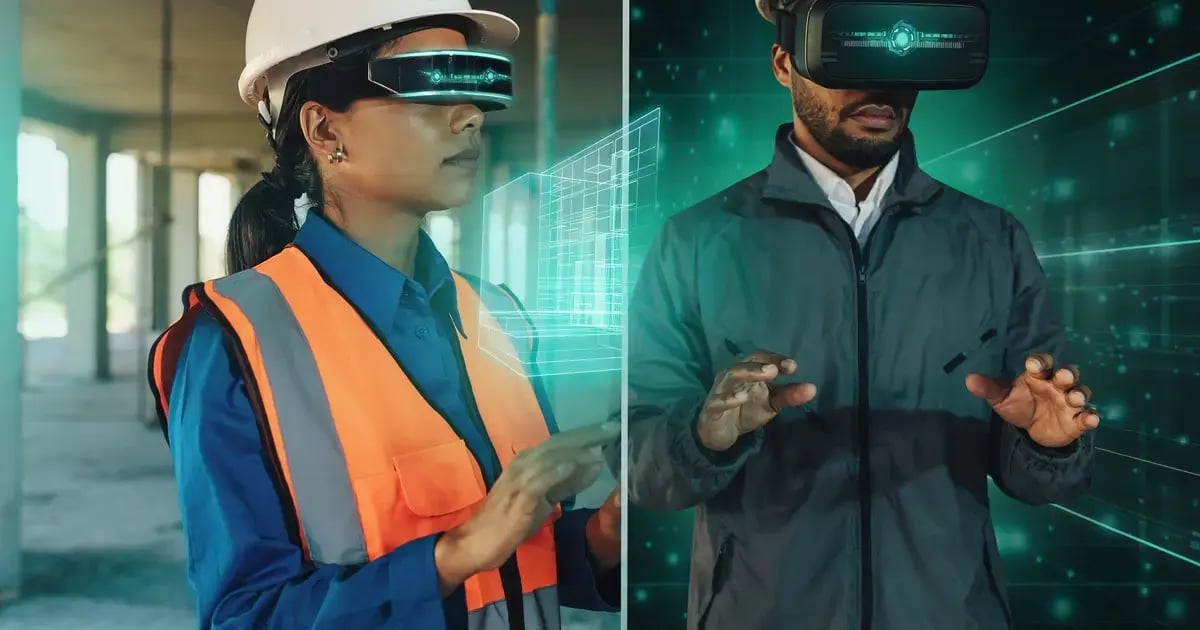
Virtual Reality (VR) is transforming the manufacturing industry. It offers immersive training experiences that traditional methods can't match. Many teams exploring vr for manufacturing report faster onboarding and fewer errors, making this approach a practical step toward modernising workforce development.
Table of Contents
Manufacturers face a growing skills gap. VR provides a solution by enhancing learning and retention through realistic simulations. As a result, vr training for manufacturing is becoming a strategic pillar for upskilling new and existing employees.
This technology is not just a trend. It's a powerful tool for bridging the skills gap in the workforce and aligning training with evolving production needs.
Explore how VR is revolutionizing training and what it means for the future of manufacturing. Below, we also introduce considerations and top vr training simulation software for manufacturing companies to guide platform selection.
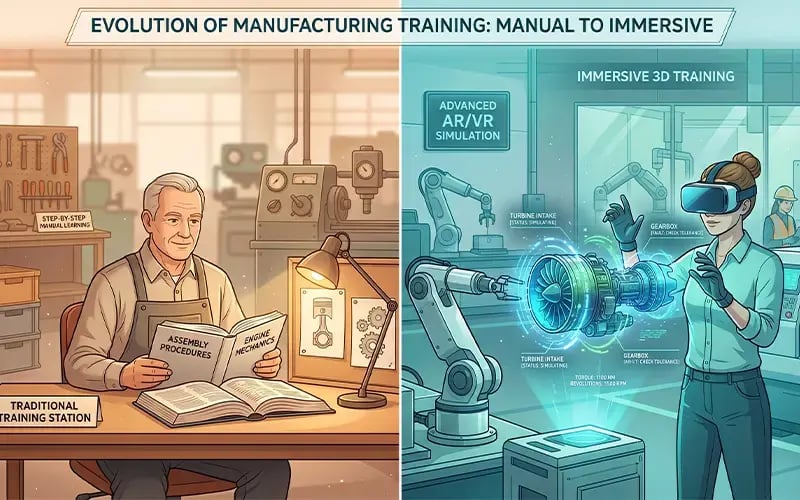
The manufacturing industry struggles with a significant skills gap. Many workers lack the necessary skills for modern manufacturing jobs. This gap affects productivity and company competitiveness.
The skills gap leads to delayed production schedules and increases costs. Manufacturers are actively seeking solutions to bridge this divide.
To address this, they're considering new training methods. Many find that innovative approaches, such as VR training, may hold the key for organizations piloting vr for manufacturing.
Key points contributing to the skills gap include:
The skills gap refers to the mismatch between worker abilities and job requirements. This gap harms production efficiency and limits growth opportunities.
Several factors contribute to the skills gap. Among these, technological advancements outpace current training.
Primary causes of the skills gap:
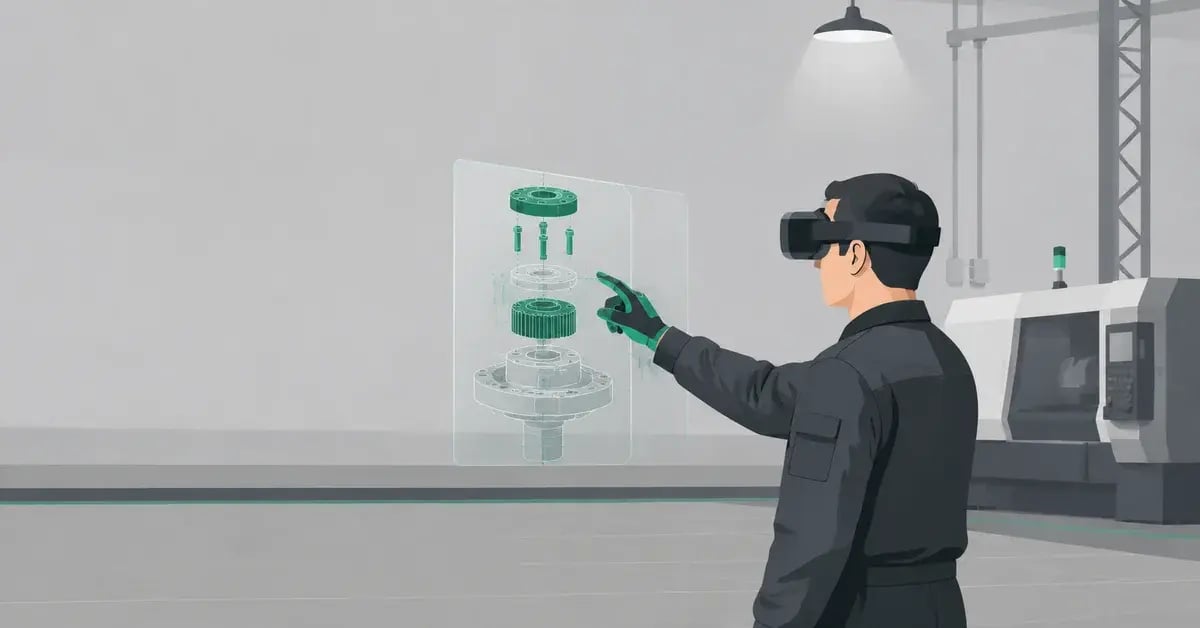
Virtual Reality (VR) transforms manufacturing training. It provides immersive, hands-on experiences that mimic real-world tasks. This technology is becoming essential for bridging the skills gap. In particular, vr training for manufacturing enables repeatable practice on complex procedures without disrupting production.
Many companies use VR to upskill workers efficiently. It allows for practical learning without the risks associated with live machinery. This approach is cost-effective, improving both engagement and retention.
Key roles of VR in manufacturing:
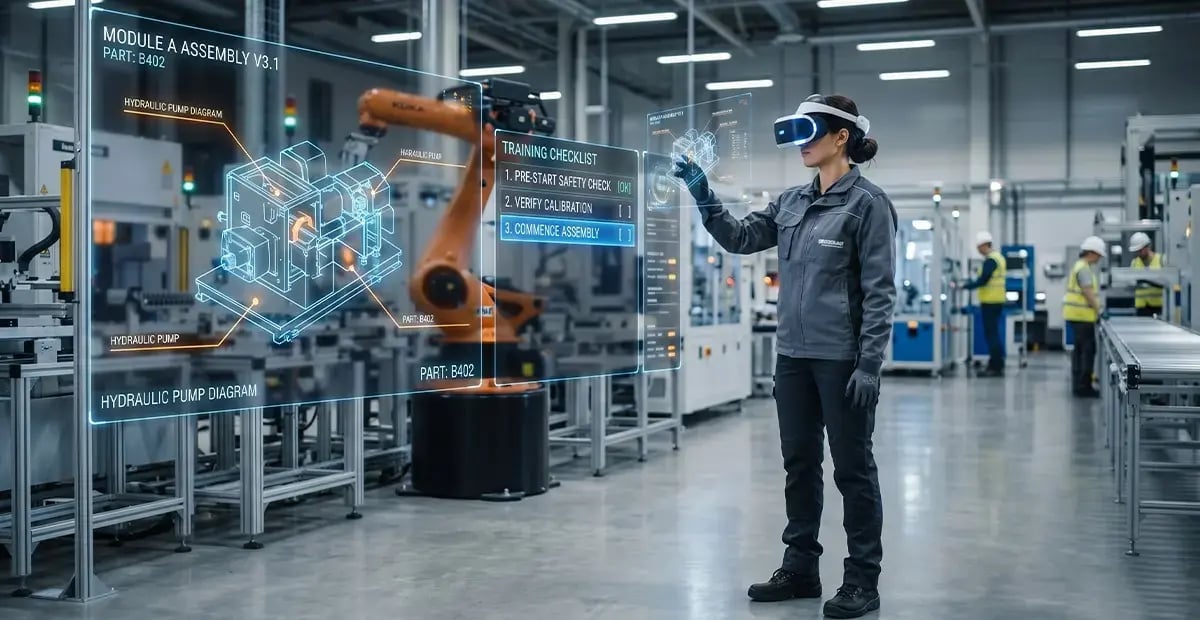
VR training immerses employees in virtual environments. This allows them to practice skills in a controlled setting. By simulating real scenarios, workers can refine their skills without workplace disruptions.
VR training offers distinct advantages compared to traditional methods. It saves time and reduces costs.
Key benefits include:
💡 Deep Dive: For industrial operations looking to transition physical blueprints into immersive pipelines, explore why executives must invest in CAD Upskilling for Digital Manufacturing.
Investing in VR training equipment can seem costly. However, the long-term savings are significant. Understanding the cost of vr training equipment for manufacturing programs helps leaders plan budgets, timelines, and staffing. While initial expenses may be high, the benefits quickly outweigh them.
VR setups require specific hardware and software. These investments lead to reduced traditional training costs. The equipment also enhances worker productivity and job satisfaction.
Key cost components include:
Enterprise Tip: To track user metrics, performance scores, and assessment milestones seamlessly, discover the benefits of deploying custom Moodle LMS Solutions for Enterprise Training.
Understanding cost components is vital for budgeting. Here's a typical breakdown:
| Core XR Infrastructure Component | Estimated Investment Range (USD) | Primary Operational Role |
| Enterprise VR Headsets (e.g., Meta Quest 3, HTC Vive) | $400 - $1,000 / unit | Provides standalone, high-fidelity spatial awareness and hands-on interaction. |
| High-Performance Edge PCs | $1,000 - $3,000 / workstation | Powers real-time 3D rendering engines and heavy polygon processing locally. |
| Spatial Motion Sensors & Trackers | Up to $2,000 / setup | Tracks precise human tool alignment, ergonomics, and spatial physics. |
| RT3D Development Software | Varies (Unity / Unreal Engine) | The foundational architecture used to deploy cross-platform training scenarios. |
The return on investment (ROI) for VR training is promising. Enhanced efficiency and reduced downtime lead to significant gains. Improved employee performance also contributes to an impressive ROI.
Several grants support VR adoption in manufacturing. Companies should explore local and national funding options. These resources can ease the financial burden of VR integration.
To implement effective VR training, certain hardware is essential. The right equipment ensures the training sessions are smooth and productive. Before rollout, clarify the hardware requirements for vr manufacturing training to avoid performance bottlenecks and compatibility issues. Manufacturing companies need to invest in compatible technologies.
A robust setup enhances the immersive learning experience. It's crucial to choose equipment that aligns with training goals. Selecting the wrong technology could lead to inefficiencies.
Key hardware components:
For successful VR implementation, choose the right tools. The equipment should meet technical needs and budget constraints.
Necessary hardware includes:
Manufacturers should prioritize quality over cost. Investing in durable, reliable equipment will yield long-term benefits. Suitable hardware minimizes downtime and maximizes training efficiency.
Choosing the right VR training software is vital for success. Many platforms offer unique features suited for manufacturing needs. When assessing top vr training simulation software for manufacturing companies, consider authoring flexibility, analytics, ease of content updates, and support.
When selecting a platform, consider its capabilities and user experience. Customizable solutions cater to specific company requirements.
Popular VR software options:
Each platform offers unique strengths tailored for manufacturing training. Unity and Unreal Engine are renowned for their flexibility. EON Reality is praised for industry-specific solutions.
Leading platforms include:
Choosing the right platform involves considering functionality and costs. Some platforms offer free trials, while others require subscriptions. Evaluate based on features, scalability, and budget.
Collaborating with the right AR/VR development company is essential. Partnering with an experienced ar/vr development company for the manufacturing industry can accelerate deployment, from content design to systems integration. These companies tailor Virtual Reality Services for Businesses & Training to meet industry-specific needs. They provide the expertise to implement cutting-edge technology in manufacturing.
When choosing a partner, evaluate their experience and success stories. Look for firms that understand your specific manufacturing processes.
Considerations when choosing a company:
Selecting an effective AR/VR partner requires careful evaluation. Focus on companies with a strong background in the manufacturing industry. Ensure they offer scalable solutions that align with your goals.
Key factors to assess:
Companies using VR in manufacturing report notable improvements. Many enjoy enhanced training efficiency and reduced errors. Real-world examples can help guide your decision-making process.