Manufacturing
training

Have you ever wasted a Saturday driving across town to a home that looked perfect in the photos, only to discover the layout was all wrong? Those wide-angle shots can be deceiving, making rooms appear larger while hiding awkward transitions or a lack of storage space. It’s a common frustration for home buyers, and it's where 360 photo real estate changes the game.
By offering a virtual tour you control, it helps you understand a home’s true flow and feel before you ever step inside. This saves everyone time: buyers confidently weed out properties that don’t fit, and sellers attract more serious interest from viewers who already know the layout works for them. It’s not a gimmick—it’s a smarter way to browse and sell homes.
In this guide:
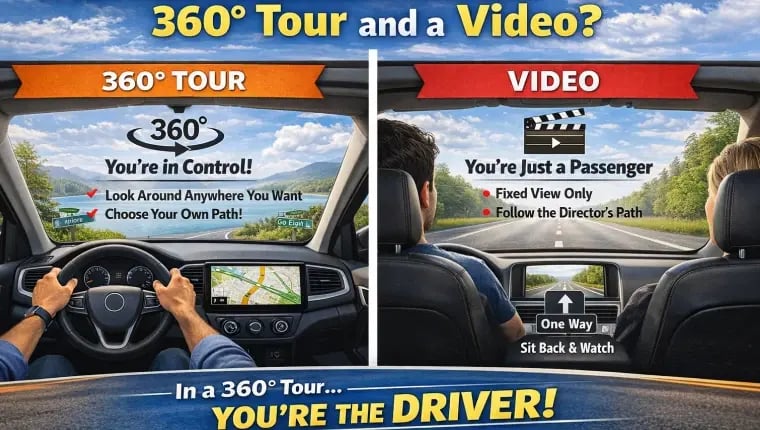
You’ve probably watched video walkthroughs where a camera glides through a home. Think of that as being a passenger in a car—someone else is steering, and you’re just along for the ride. A 360 tour, on the other hand, puts you in the driver's seat. You control where you look and where you go.
This interactive experience is built from a series of high-resolution 360 photos. Using a special camera, a photographer captures a complete sphere of the room from multiple points. Software then “stitches” these individual viewpoints together, creating clickable arrows that let you “walk” from the living room to the kitchen at your own pace.
Ultimately, the power of a 360 tour is the sense of control it gives you. You can linger in the kitchen, peer into corners, and look up at the ceiling—all things a pre-recorded video can't offer. This freedom to explore is what gives you a true, authentic feel for the home's layout before you ever step inside.
A 3D tour is more than just a cool feature; it's your first chance to play detective and avoid wasted trips across town. While photos are curated to show a home’s best angles, an interactive tour lets you look past the staging and truly investigate. By using these tours actively instead of passively, you can uncover details that photos—and sometimes even descriptions—leave out.
Instead of just clicking through, use these Zillow 3D Home tour tips on any platform to perform a mini-inspection from your couch.
By taking this active approach, you’re no longer just looking—you’re qualifying. You can confidently filter out homes that won’t work and build a shortlist of properties that truly deserve an in-person visit. This level of detail doesn't just empower buyers; it's also a powerful tool for sellers.
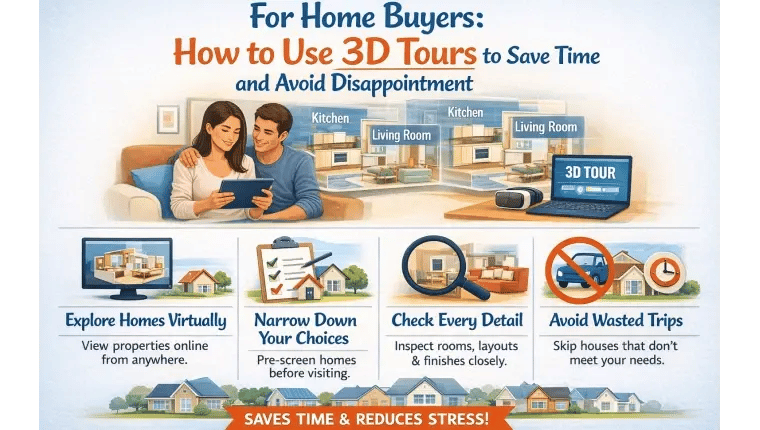
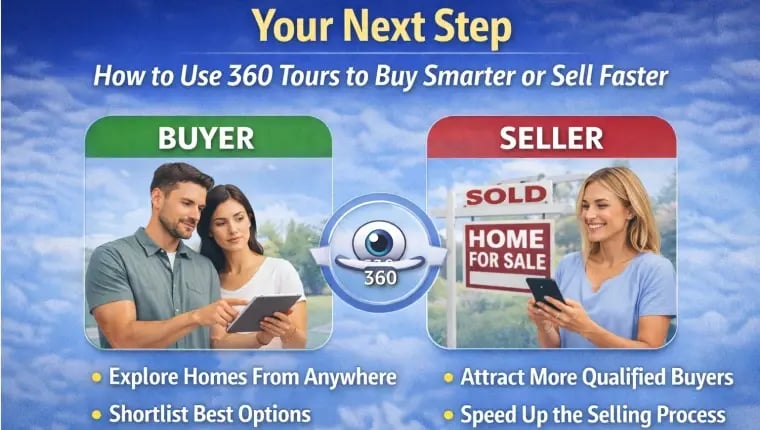
While buyers use 3D tours to save time, sellers reap even bigger rewards. Think of a 3D walkthrough as your home’s 24/7 open house. It allows potential buyers to explore your property on their own schedule, whether it’s late at night or during a lunch break. This constant accessibility dramatically expands the number of people who can seriously consider your home, answering the question of are virtual property tours effective with a resounding yes.
More importantly, these tours act as an automatic filter. If a buyer discovers the layout is a deal-breaker online, you’ve just avoided a pointless in-person showing. This pre-qualification means the people who do book a visit are already serious and have confirmed your home’s flow works for them. You get fewer casual browsers and more qualified leads, a key way to increase property inquiries with virtual tours that actually matter.
In a crowded online market, marketing a listing with a 3D walkthrough also helps you stand out. Real estate portals want to give users a great experience, so their systems often highlight listings with comprehensive features like 3D tours. This can boost your visibility, putting your home in front of more people.

Choosing the right 360 degree camera for real estate photography requires careful consideration of image quality, ease of use, and budget. Professional real estate virtual tours demand high-resolution cameras like the Matterport Pro2, Ricoh Theta Z1, or Insta360X5 series that capture stunning 360° panoramas with exceptional detail.
When choosing a , consider the following:
To successfully build an interactive industrial environment, selecting the proper framework is essential. You can review our full guide on the best platforms for virtual factory tours to evaluate your technical options.
You’ve likely clicked through a basic 360 tour, moving from one photo to the next. But some tours go much further by creating a full 3D Model—a complete digital copy of the home. This technology unlocks a totally new way to understand a property before you ever step inside.
The most powerful feature of a 3D model is the “dollhouse view.” As you can see in the image, it’s like looking at a miniature house with the roof removed. You can see how every room on every floor fits together, creating truly interactive floor plans for property listings that are far more intuitive than a flat drawing.
From this bird’s-eye perspective, you can also jump to a top-down Floorplan View for a traditional layout. This immediate understanding of a home’s flow is the real game-changer, answering critical layout questions that photos alone never could. While the real estate virtual tour pricing for these models is higher, the unparalleled clarity they offer buyers is why many agents feel they are worth the investment.
Where flat photos once left you guessing about a home’s layout, 360 tours let you step inside a property from your couch, understanding its flow and feel before ever scheduling a visit. This knowledge gives you control over your real estate journey.
Put this power to use. As a home buyer, filter your next search for listings with a "3D Tour" to focus only on the most transparent properties. As a seller, make this a key question for your agent: "Is a 360 tour part of your standard marketing plan?" Their answer reveals how modern their strategy truly is.
This technology is more than a novelty; it is a fundamental shift toward clarity and efficiency. By demanding and using these tools, you are no longer just participating in the market—you are making it work better for you, ensuring your next big decision is a confident and well-informed one.